

.png)
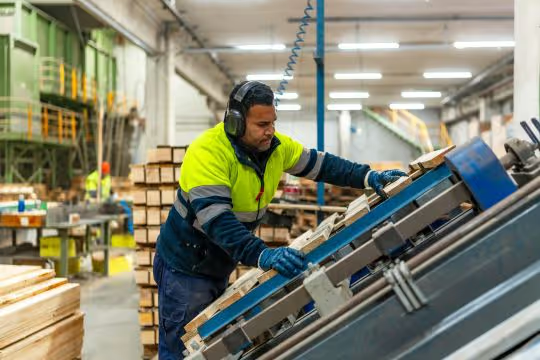
One of the concerns in the pallet industry today is the labor shortage. As demand for packaging solutions increases significantly, many companies in the pallet industry are now facing the challenge of finding enough labor to meet demand. Labor shortages are daunting; however, the question of how pallet manufacturers can address them is answered through several strategic actions.

The first step in addressing the labor shortage is ensuring you attract the right talent. The way you can address labor shortages starts with revamping your recruitment marketing to attract the right talent. Recruitment marketing is a key element for manufacturers in a competitive market environment. By adopting a proper recruitment marketing strategy, you can overcome a labor shortage.
Use industry-specific job boards to find qualified candidates for your positions. The pallet wood packaging industry has employment sites specifically designed for applicants who have the required skill sets for your positions. By posting on these sites, you’re targeting applicants who already have some knowledge about the required tasks for these positions.
Another strategy you can leverage is social media marketing. Social media platforms such as LinkedIn, Facebook, and Instagram can be used to reach large audiences. By posting interesting content such as stories about your employees, production processes, or available positions, you can attract younger generations who believe in transparency and can be potential applicants for your positions.
It’s also important to target younger generations, as they seek career paths with opportunities for long-term growth and development. This will make your company more attractive to this age group through its flexible working opportunities.
By analysing and adjusting your marketing plan, you can adopt a new approach to manufacturer recruitment marketing to increase the number of candidates well-suited to the pallet manufacturing industry's recruiting challenges.
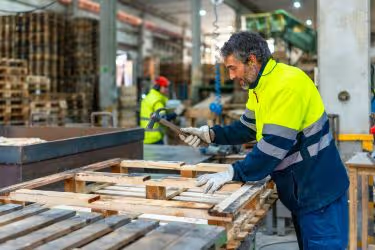
After recruiting new employees, retaining those employees is a critical part of addressing labor shortages. Considerable labour shortages are experienced within the pallet industry. Reducing turnover reduces your company's recruitment and training costs, thereby improving employee morale, team productivity, and job performance. Employees who have been employed by your company for an extended period will be much more productive and committed to their job performance.
Employers should provide competitive salaries and benefits to keep their employees engaged. Salaries affect retention in many ways. Make sure you review other companies' pay rates frequently to stay competitive with their compensation package.
It is also important to offer career advancement opportunities for those who want to develop their skills at your company. An employee who has been given opportunities to advance will be less likely to leave your company. When an employee sees opportunities for advancement within the company, they will stay with the company longer.
You can also provide employees with resources to ensure their physical health. Since most manufacturing jobs are physically intensive, employees will be more likely to remain with you if they believe you value their health and well-being. Incorporating wellness programs, offering mental health support, and providing ergonomic options can reduce employee burnout and stress, leading to increased retention.
When you think about ways to keep your employees happy while working in manufacturing, you will also reduce employee turnover, maintaining a stable workforce and decreasing the impact of the labor shortage in the pallet manufacturing industry.

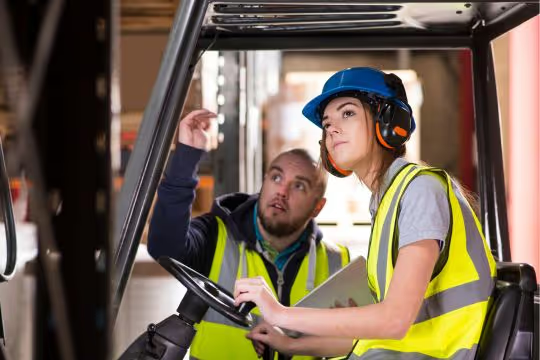
How pallet manufacturers can handle labor shortages when looking within the company is by cross-training. Cross-trained employees are prepared to perform a variety of tasks for your company. This reduces reliance on any single employee and increases your operational flexibility. If an employee is absent or production volumes change, your cross-trained employees can respond quickly.
Employees who receive cross-training can switch roles as needed without difficulty. For example, if a worker in the sawmill department is absent, an employee who normally works on the assembly line can take their place.
Cross-training will also help to increase productivity. Having multiple employees trained in different areas helps avoid bottlenecks in the production process. If someone is absent or if a department has too few employees, others within that department can do their jobs without delaying production.
Cross-training increases job satisfaction for employees. Employees enjoy learning new skills and having new responsibilities. By providing employees with a variety of duties through cross-training, companies can reduce the chance of employee boredom and increase employee job satisfaction.
Additionally, cross-training reduces the likelihood of a major disruption caused by an employee leaving suddenly or taking an extended medical leave. Cross-training an employee will enable a smooth transition to another position if the employee is unavailable. Cross-training helps to minimize turnover and maintain the productive operation of your production line.
Cross-training your employees enables pallet manufacturers to manage labor scarcity and build a flexible, efficient, and robust workforce.
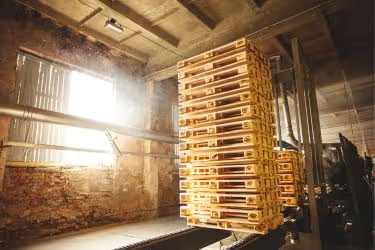
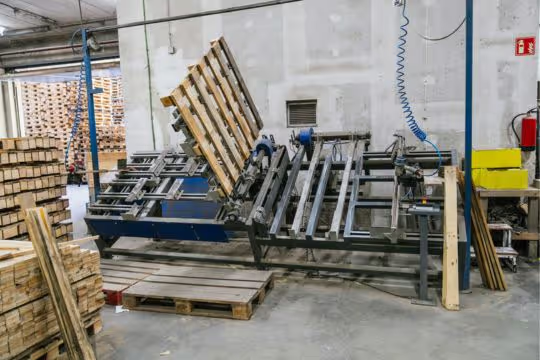
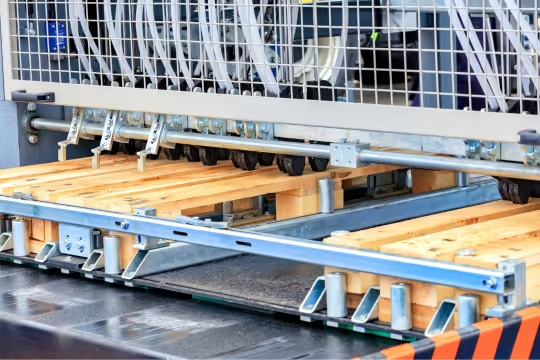
Automating many tasks associated with manufacturing pallets is an excellent resource for pallet manufacturers. Automating certain processes in your facility will improve production efficiency and reduce the number of workers needed for repetitive, physically demanding tasks.
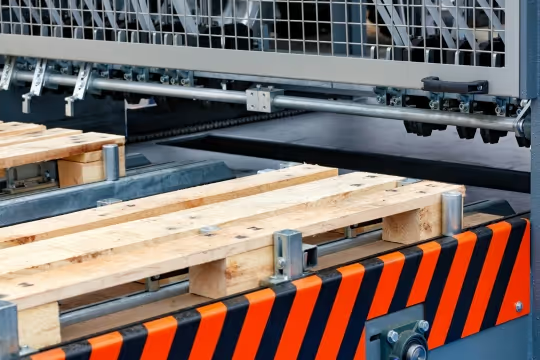
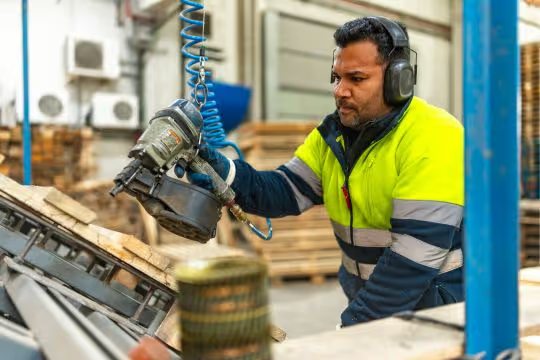
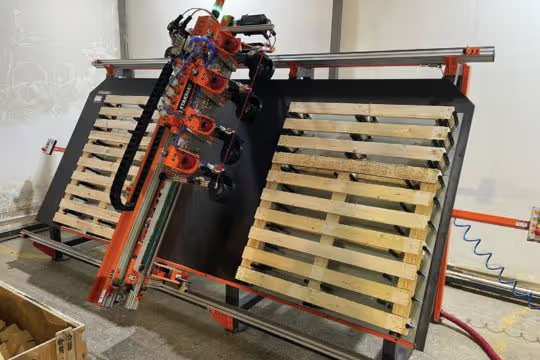
Using automated nailing systems will speed up the pallet assembly process by automatically driving nails into the wood. With automated nailing systems, manual labour is no longer required in the assembly process, allowing pallets to be assembled faster and more consistently.
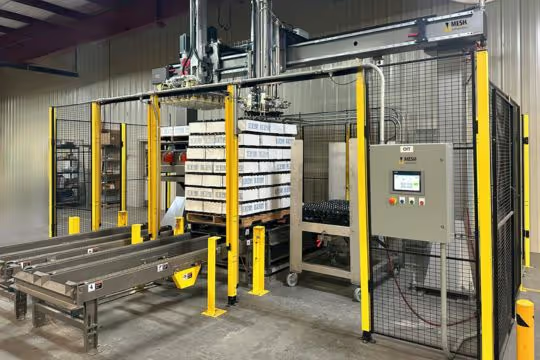
Robotic systems can be used for various tasks, such as stacking pallets or packaging. The use of robotic technology eliminates manual labour from the product-handling process while also increasing productivity and overall throughput in your facility.
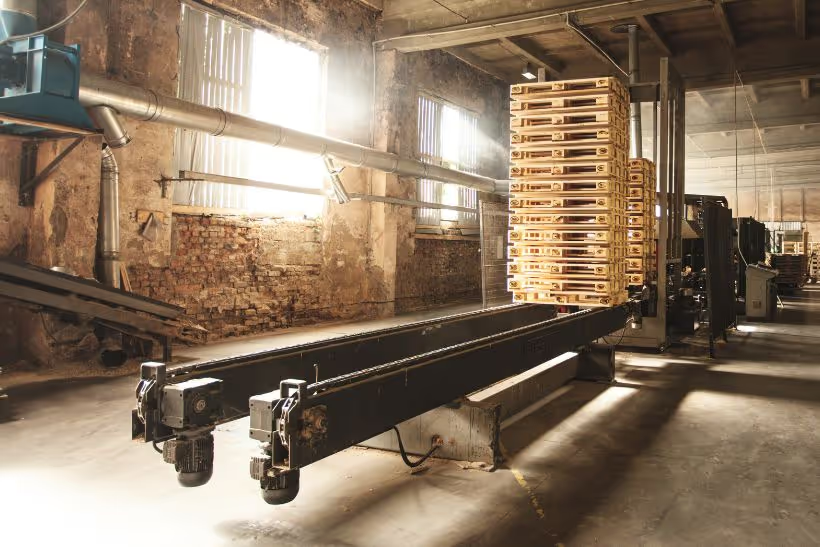
Many pallet manufacturers use automated conveyor systems and robotic arms to transport raw materials and finished pallets between areas of the facility. Automating the movement of materials reduces manual handling, speeds up production, and reduces worker stress. Therefore, implementing automation will help reduce workplace injuries associated with pallet manufacturing.
Pallet manufacturers can also implement automated quality control systems. Automation can assist in inspecting completed pallets for defects and ensure that only quality products are shipped to customers. Automated systems use cameras and sensors that can detect defects far more accurately than humans can.
Investing in automation may require an initial expense, but in the long run, it will lower labor costs and improve efficiency in your production process. As a result, automated systems are essential tools for pallet manufacturers to effectively mitigate their labor shortage issue.
Temporary workers are a highly effective option for pallet manufacturers experiencing labour shortages, particularly during peak demand or on a seasonal basis. Temporary workers allow manufacturers the flexibility to adjust their workforce based on production requirements and to avoid long-term contractual commitments.
Temporary workers can be utilized during peak production periods to increase the pallet manufacturer's manufacturing capacity or for limited-scope projects that require additional assistance. This flexibility allows the manufacturer to meet their production goal without incurring additional permanent payroll expense.
Hiring short-term staffing can be less expensive than hiring permanently because you’re only paying for labor when you need it, thereby allowing you to keep labor costs in line with demand.
Although temporary labor is a short-term solution, it’s an effective strategy for alleviating labor shortages and meeting production requirements.
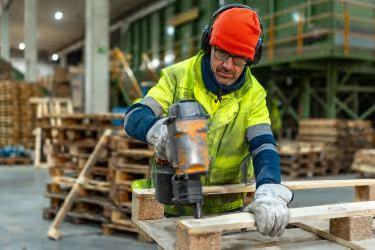
Like many other industries, the pallet manufacturing industry is facing an aging workforce. Manufacturers of pallets will need to adjust to the changing demographics of the workforce, as many of the older workers retire and not nearly enough young people enter the field. Paying attention to this demographic change can account for a significant portion of how pallet manufacturers can handle labor shortages.
You can work with local vocational schools and universities as well as with trainees and apprentices to develop a steady supply of young people entering the workforce. In addition to being an important source of new talent, internships, apprenticeships, and entry-level jobs will attract younger applicants.
Younger workers place great importance on work-life balance. For this reason, it would be wise to make your company more appealing to these workers by offering flexible working conditions, such as part-time roles or flexible shifts, as well as remote work for administrative duties.
You will also help keep your workforce strong and able to meet the demands of your industry by adapting to trends in industrial labor and focusing on recruiting younger workers.
If you have labor shortages at your company, take a look at our marketing services for industrial companies.