

.png)
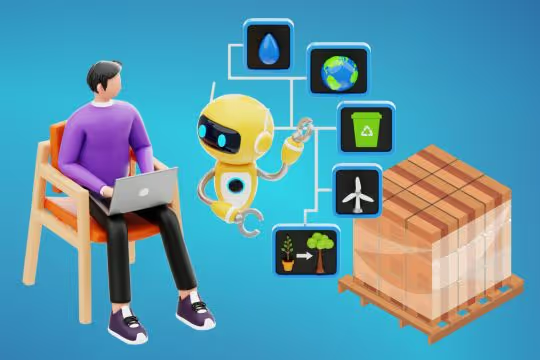
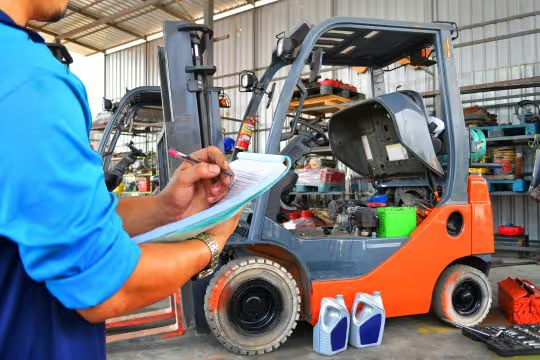
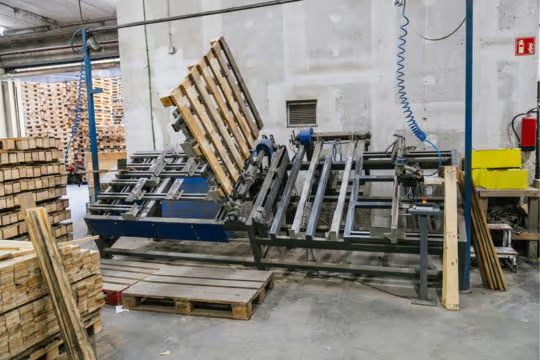
Within your own facility, AI performs an excellent job of monitoring machines to ensure optimal functionality. By measuring vibrations, temperature increases, and process lengths, it can predict when equipment is likely to malfunction without preventative maintenance. When you know ahead of time that your hydraulic or spindle is about to fail, you can schedule maintenance rather than having unscheduled downtime.
How are facilities actually using AI in pallet manufacturing?
There is little doubt that AI boosts any pallet production automation benefits you are already enjoying.
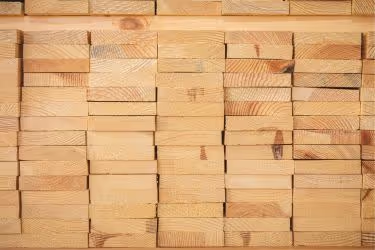
So far, we have discussed AI in pallet manufacturing, with a focus on wood as the primary raw material. However, there are also examples of how AI improves pallet quality in facilities that use other materials. Here, the technology estimates strength-to-weight ratios to determine the required resin blend. AI measures fiber content, which defines a recycled pallet's impact resistance.
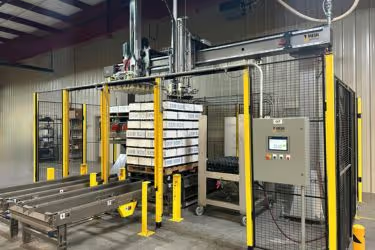
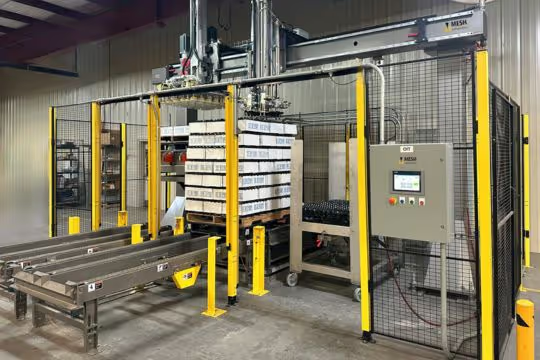
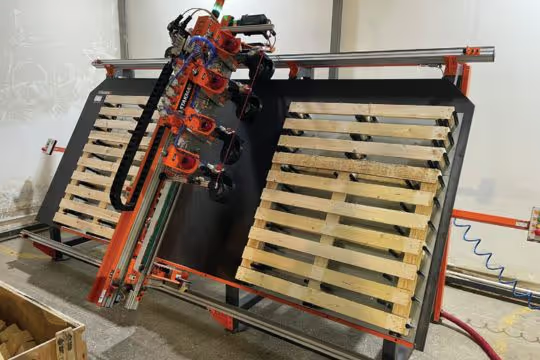
Robotic palletizers are already in use. They combine robotic arms, sensors, and software to determine product stacking on pallets. In some cases, articulated arm palletizers replace human labor in the pharmaceutical and food industries. These machines rely on AI to handle multiple product sizes, do mixed-SKU palletizing, and maximize pallet loads.
When facilities utilize collaborative palletizers (Cobot Palletizers), AI enables the machinery to be safe for operation near humans, allowing for lower cycle speeds and payloads. For automated tasks, AI governs the speed increase to ensure it remains within safe levels. This technology utilizes AI vision systems that enable machinery to detect a product's shape, size, orientation, and position on the conveyor. Upgraded 3D vision technology enables mixed-SKU stacking and de-palletizing.
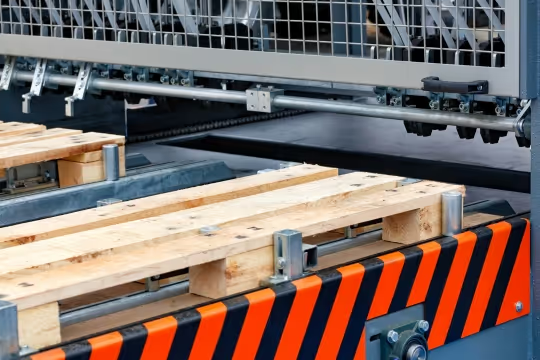
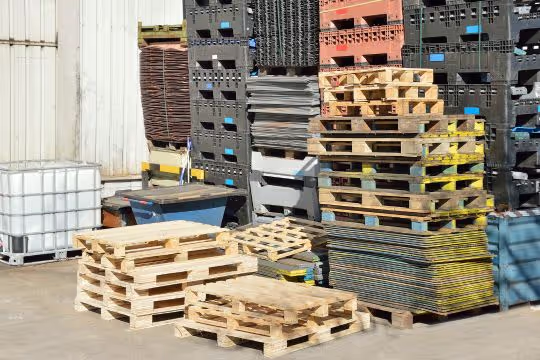
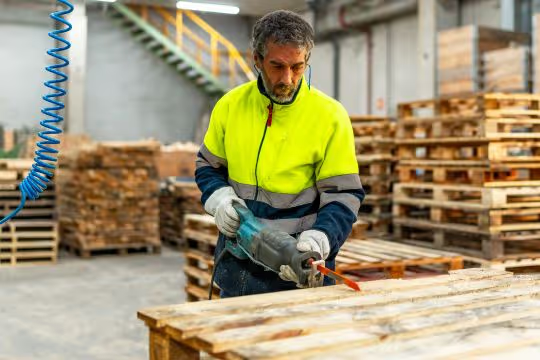
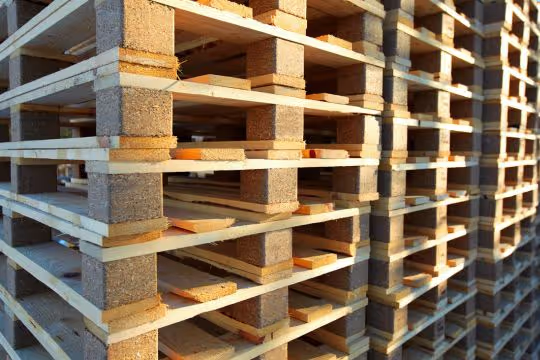
Before your pallets even leave your facility and head to warehouses and shippers, you can use AI pallet inspection to detect defects and guide repairs – all without human intervention. The cameras and sensors assist machine learning with detecting, verifying, and processing cracked deck boards, split stringers, protruding nails, mold, and improper board alignment.
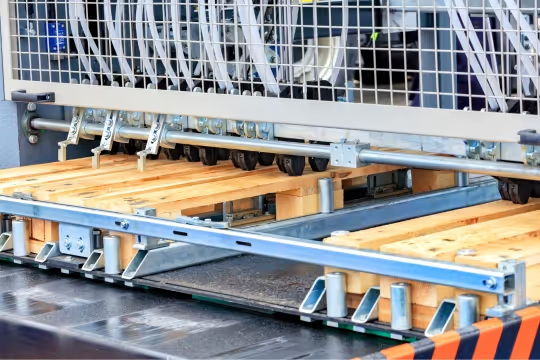
In many cases, the technology allows you to automate repair decisions. Here, you may connect human labor or robotic repair lines to sensors. Recycled pallet yards already use this level of automation to identify scrap and pallet grades. In factory settings, ruggedized AI controllers are ideal for running vision, robotics, and automation learning modules. The controllers are mounted right to the production line, where they make real-time decisions.
So far, we have discussed the hands-on benefits of AI for pallet tracking, AI camera systems for sawmills, and AI-powered pallet sorting. Let's take a step back and examine the administrative advantages of incorporating AI into your facility's day-to-day operations.
Stepping off the factory floor, it becomes clear that AI enables you to prepare quotes more quickly and accurately for customers. You not only factor in build times at your facility, but you can also integrate lumber costs. Quotes reach your customers faster and are also more consistent, resulting in better margins.
AI integration into the front office enables automated order entry and customer communication. Computers can handle routine questions about order status or lead times while triggering confirmation emails and delivery window updates. If you offer automated ordering via your website, AI can handle the order entry. All these steps reduce the administrative staff's workload while minimizing clerical errors.
Other administrative benefits include:
Which additional benefits could AI offer your factory, regardless of its size or production volume? For starters, consider that integrating AI into key automation enables executives to gain insights that would have taken days or weeks to calculate manually. You can immediately determine the actual cost per pallet, the profitability of each shift, how freight and production costs balance, and how the lumber market is impacting your pricing. From there, AI enables the preparation of documentation for loan applications, hiring decisions, and machine upgrade investments.
How do you start integrating artificial intelligence into your facility's current operations? Do you start with predictive maintenance technology, palletizing algorithms, or vision AI for defect detection? In fact, Zira AI pallet operations is an excellent place to start. It is an operations platform that handles everything from productivity to workforce management.
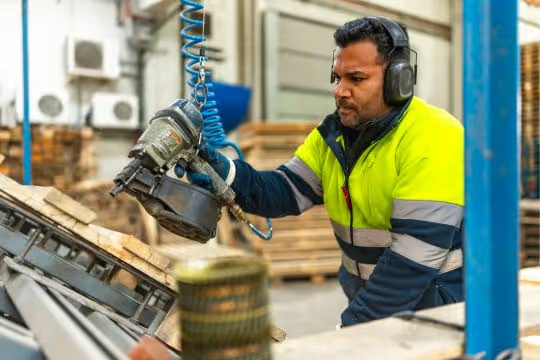
You can connect Zira to nailing machines, saw lines, and lumber processing equipment. AI will track downtime trends, compute outputs, flag underperforming machines, and provide a real-time running calculation of the cost per pallet. When connected with human resources management software, you measure inconsistent productivity and automate incentive pay. For the facility accepting rush orders, the operations platform will handle additional labor scheduling and alert you to material shortages.
While there are other platforms to consider, Zira could be an excellent introductory product for small to mid-sized manufacturers with an eye on scalability.
When you successfully integrate AI into your manufacturing process, you will see an increase in orders and a decrease in waste. Does your online presence match your facility's capabilities? While you handle the AI integration, partner with our team to handle everything from website design to social media marketing. Our pallet business marketing company would welcome an opportunity to discuss your options.
Schedule a call today!