

.png)

Preventative maintenance is a system of periodic cleaning and inspections of machinery and equipment along with replacement of worn parts in order to ensure their proper, continuous and stable operation. It is designed to prevent equipment failures or breakdowns so as to avoid expensive repairs and downtime while keeping essential equipment running safely and efficiently.
In contrast to reactive maintenance, which addresses issues only after they arise, preventive maintenance keeps machinery in consistent working order. In doing so, it helps to extend your equipment’s lifespan and reduce the danger of equipment failure.
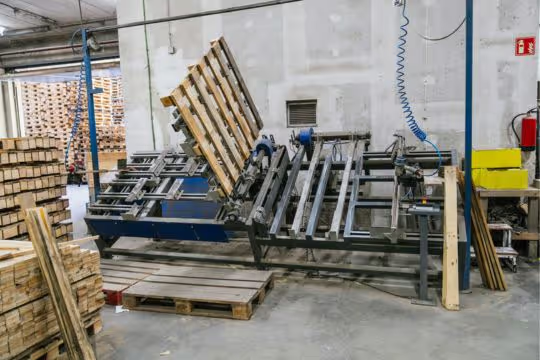
By not implementing preventative maintenance for pallet manufacturing equipment, you can inadvertently promote sudden breakdowns that cost you greatly in replacements and repairs, as well as unplanned downtime that can be detrimental to your business. Production line halts, and the necessity for costly repairs can lead to significant financial losses. By putting simple, systematic maintenance procedures in place, however, you can avoid these detriments and ensure steady and smooth production on an ongoing basis.
Preventive maintenance for pallet manufacturing equipment can save pallet manufacturers significantly in multiple ways, both in the short and long terms.
By regularly maintaining your pallet equipment, you can significantly lower the chances of sudden equipment shutdowns and failures.
Inspecting your equipment before and between uses helps you to identify possible problems before they occur. This allows you to avoid costly downtime and maintain steady, smooth production.

With preventative maintenance for pallet manufacturing equipment, you can ensure that the equipment remains functional and efficient. By preventing breakdowns, you can save on needless parts replacements and repairs and avoid emergencies that can hamper or even halt your operations. All of this significantly reduces maintenance costs.
Through regular equipment inspections, you can spot potential safety issues early and prevent injuries and accidents. Early detection leads to early resolution, thereby keeping your work environment safe for your staff and minimizing the danger of workplace accidents.
By implementing preventative maintenance in a pallet manufacturing business, you can stave off major breakdowns and extend the lifespan of your equipment. When you conduct routine machinery adjustments and replace worn parts before they fail, you can ensure your equipment remains reliable, stable, and functional for much longer than it otherwise would.
Every element of your workflow relies on the others to operate smoothly and efficiently. Cutting corners in the interest of increased productivity can be tempting, but then you would be sacrificing long-term sustainability for short-term results. You must therefore prioritize maintenance throughout your whole workflow. Here is just one example of how you may approach preventative maintenance scheduling for your equipment.

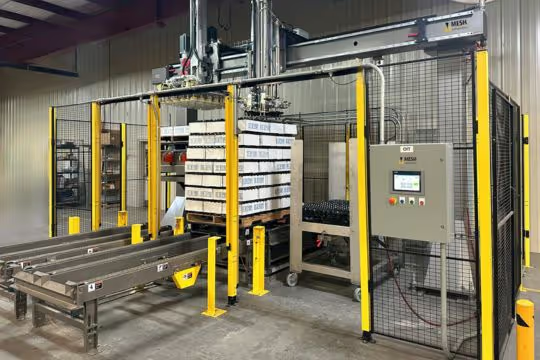
When maintaining pallet wrappers preventively, you would inspect and service critical components that directly affect the safety, stability, and performance of the machinery. By regularly conducting these procedures, you can help avoid breakdowns and secure their longevity and reliability. These critical components include the following.
To secure proper wrapping, inspect the rollers for wear and adjust the film tension. This will improve efficiency and reduce material waste.
Gearboxes and motors are key components that impact the entire system’s performance. Check for lubrication, wear, and troubleshooting needs to ensure smooth operation.
You can prevent breakages and avoid resulting production downtime by checking the wear resistance and tension of all belts and chains.
When sensors malfunction, the entire machine will operate incorrectly, reducing the quality of packaging and increasing your costs. To prevent system errors, sensors must be regularly inspected for cleanliness and accuracy.
Everyone on your staff is responsible for ensuring the equipment they handle operates effectively and efficiently. Machine operators should take accountability for visual inspections, cleaning, and other simple duties, while technical specialists can handle part replacement, sensor calibration, and other more involved duties.
You can also encourage all staff to report any equipment issues they encounter by setting up anonymous reporting systems.
Whether you’re starting a brand-new preventive maintenance plan or upgrading an existing one, there are a few basic steps to make it as practical and effective as possible.

First, decide on a starting point for your preventive maintenance program by listing all your equipment and assigning each item a numerical identifier. This can make tracking costs and repair needs easier. Determine the performance status of each item, ensuring it meets the manufacturer’s specs and guidelines. Determine each piece of equipment’s priority to allocate maintenance time and expenditures most efficiently.
Creating downtime logs and service request sheets can also help your program run more smoothly. Organize each system and its corresponding parts inventory by type. Examine each system to determine its repair needs and prioritize repairs accordingly. It can help in this process to go over the repair schedules and operator’s manuals for each piece of equipment.
Safety should always take top priority in determining your order and schedule of inspections and repairs. Beyond safety, prioritize your efforts based on your most valuable and frequently used assets. Set operational goals for each one, and gauge their relative performance according to how well they help meet those goals. Then you can more accurately and efficiently assign labor time, skill levels, and budgets to each task.
Critical to an effective preventive maintenance program is establishing the optimal maintenance schedule for your unique pallet manufacturing business. To create a preventive maintenance schedule that works best for you, you need to account for how intensively you use your equipment, its current condition, and your operating schedule and business cycles. Try scheduling inspections and maintenance tasks for off-hours or slower periods. Then, avoid postponing or overriding these maintenance duties in the interest of immediate goals.
An ideal preventative maintenance schedule would involve daily, weekly, and monthly duties, as follows:
If your equipment operates 24/7, consider a more frequent maintenance schedule to account for heavier usage. Inspections should also be more frequent when operating conditions involve high temperatures or produce significant dust to prevent sensitive elements from wear and tear. In addition to operating conditions, consider the type of equipment involved. Each model may require different maintenance duties. Therefore, be sure to tailor your maintenance schedule to each machine’s own unique needs.

Ensuring every employee is on the same page regarding preventive maintenance duties is critical to success in these endeavors. Every operational team or machine operator should be able to follow the same, proper tag-out, lock-out, and safety procedures from lubrication to simple adjustments and minor repairs to reporting of larger areas of concern.
Allowing five or 10 minutes before and after each shift for essential inspection duties can help you stay on top of the condition and needs of all your equipment. Code all purchase orders to better develop budgets, track costs, and indicate when assets reach the end of their lifespan. Organize all replacement parts, store them safely, and establish minimum reorder levels for each. Include regular reviews of your current preventive maintenance plan to ensure it's as practical and useful as possible and, if necessary, make any adjustments.
With the advent of artificial intelligence, the internet of things, cloud computing, and machine learning, there’s now a popular, emerging alternative to preventive maintenance known as predictive maintenance. While preventive maintenance involves regular inspection and maintenance to avoid problems, predictive maintenance uses advanced technologies to predict problems before they occur. Predictive maintenance can help your pallet company reduce energy consumption, increase productivity, improve workplace safety, better control parts, and optimize maintenance.
Examples of ways pallet companies can implement AI for predictive maintenance purposes include:
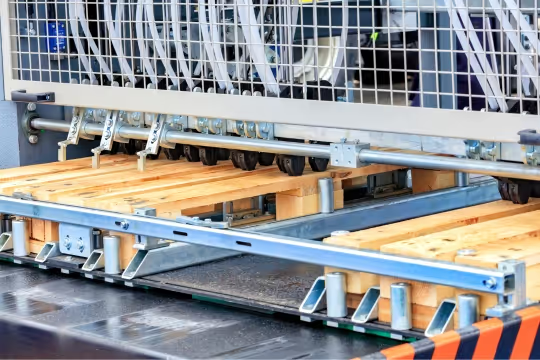
With the aid of a predictive equipment monitoring system using cameras and sensors, machine learning can help detect, verify, and process split stringers, improper board alignment, cracked deck boards, mold, and protruding nails.
Be sure the preventative maintenance plan you create is proactive, not reactive. Hone in on potential concerns early by conducting routine inspections, tune-ups and other critical maintenance tasks. While this may seem to cost you more in time and effort up front, by addressing these issues as early as possible, you make repairs easier and less costly and avoid more costly problems resulting from faulty or malfunctioning equipment.
Make your plan as specific as possible, accounting for how each piece of machinery operates and how frequently you utilize it.
Account for seasonality by using slower periods to conduct longer, more complex maintenance tasks. This can help you ensure optimal performance during more demanding periods without unnecessary, potentially detrimental downtime.
Maintain thorough documentation of all inspection, maintenance, and repair tasks conducted, issues encountered, and machine parts ordered, regardless of whether a specialist is called in to assist. Such diligent record-keeping can help you identify more serious problems with your machinery and better address their needs. It can also help you fine-tune your system for future preventive maintenance.
Avoid the need to order spare parts and wait for delivery by keeping them in stock. You never know when an unexpected issue can arise, whether during preventive maintenance or in operation. Prepare for such eventualities, ensure speedy repairs, and eliminate any unnecessary and costly downtime spent waiting for replacement parts.
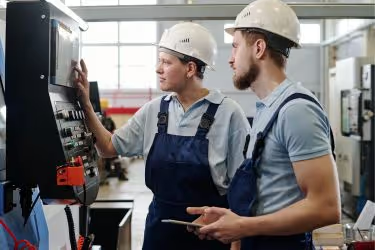
Your employees do not need to be equipment specialists to participate effectively in your pallet company’s preventive maintenance program. Train all your employees at least annually to equip them with the information and skills they require to operate all equipment properly. Simple refresher classes can help avoid accidents and errors and minimize expensive, unexpected repairs.
Preventive maintenance is far more than an added expense in your company budget; it’s an investment in your business that can save you inordinately on long-term expenses. By maintaining your equipment more regularly, you can stave off costly repairs, minimize downtime, and extend equipment lifespan. Create and implement your preventive maintenance program as soon as possible to make your operation more efficient in both cost and performance. To help serve those same ends, call us today for a comprehensive marketing analysis for pallet companies.