

.png)
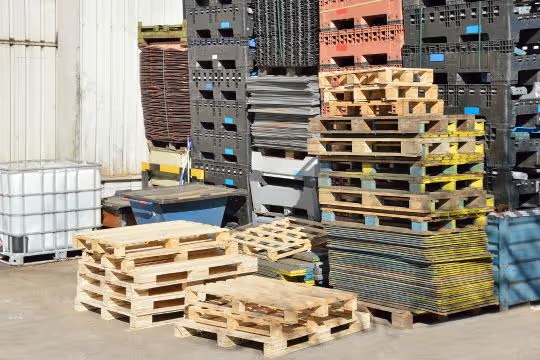
Environmental, economic, regulatory, and technological shifts are integral to the current shipping industry's landscape. Concurrently, they are predicting a strong future for plastic and recycled pallets in supply chains. Durable, reusable pallet solutions are quickly overtaking the dated, wood-produced alternatives. How can small to mid-sized manufacturers capitalize on the growing trend of plastic pallets? Let's take a closer look.
The shift toward circular supply chains relies heavily on plastic pallets. They last longer than wood pallets, can be completely recycled and transformed into new pallets after reaching the end of their useful lives, and are well-suited for pallet buy-back programs. What does this mean in practical terms?
Another advantage of pallets in closed-loop supply chains is the opportunity for tracking and tracing. Shippers and manufacturers can track the locations of their pallets (and goods), which allows for predictable pallet return schedules. In this way, they are superior to their wooden counterparts because it is possible to manufacture plastic that embeds tracking technology into the material itself.
When a wooden pallet breaks, it creates waste and requires replacement. As a result, it breaks the loop. In contrast, plastic may crack, although this is rare, and the crack can typically be repaired. Their shape remains unchanged, and it is not necessary to transport them to a landfill during the loop period.
When it comes to hygiene, pallets made of plastic are a good choice. There is indeed a bright future for plastic and recycled pallets in supply chains involving pharmaceuticals, retail, and food transportation. Because international transport is concerned with introducing pests or spores into environments free from them, it is an advantage that plastic pallets are easily pressure-washed. There is no need to shift loads from one set of wood pallets to another.
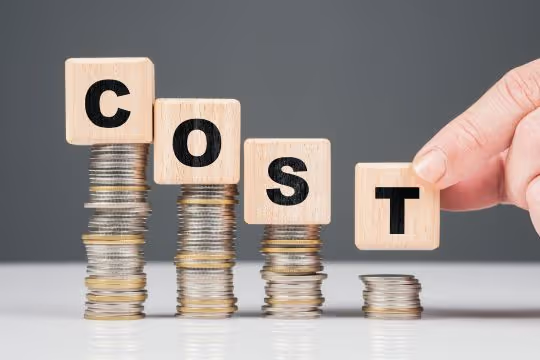
The circular supply chain benefits from the fact that plastic pallets are recyclable. They can be ground into powder, which is then processed into resin, and shaped into a new pallet. There is no need to introduce new materials, which are an integral part of pallet cost reduction.
When shippers discuss innovative pallet technology, they are referring to IoT-enabled smart pallets. IoT stands for the "Internet of Things," referring to the integration of sensors for real-time tracking and monitoring of physical objects. In fact, smart pallets can actively generate data that makes shipments highly visible and easy to control.
There are different technologies currently in use that will make a pallet smart.
There is additional technology that will transform the average recycled plastic pallet into an innovative model. For example, within storage settings, integrating sensors that track temperature, humidity, vibration, weight, and tilt can be critical for protecting shipments from spoilage or damage. Shippers know at all times whether their load of fresh-caught salmon is stored at optimum temperatures. Moreover, IoT smart pallets can be calibrated to work seamlessly with warehouse management systems (WMS), robotics, and other similar technologies, thereby reducing errors and ensuring the timely receipt of goods. For the shippers, this means that the salmon load is handled correctly and delivered to the end consumer within the projected timeframe.
Why does it matter? High-end technological parts are susceptible to moisture and drop damage. Ready-to-eat foods, dairy products, and seafood are tremendously sensitive to temperature fluctuations. Make a mistake here, and an entire load can be lost. The integration of innovative pallet technology protects shippers against these financial hits.

The Food Safety Modernization Act (FSMA) regulates sanitation and material safety within food, beverage, and pharmaceutical supply chains. The goal is to prevent biological, chemical, and physical contamination. Additionally, they are looking to present allergen cross-contact.
Plastic pallets comply. They are made from food-grade materials, such as high-density polyethylene (HDPE) or polypropylene (PP). Being non-porous and non-toxic, these pallets are safe for indirect food contact and do not contain harmful coatings. Moreover, they are suitable options for pharmaceutical manufacturers that adhere to clean room protocols. Plastics do not shed materials, resist chemicals and moisture, and are well-suited for pharmaceutical warehousing and ingredient transport applications.
In contrast, wood pallets typically need chemical treatments to eradicate mold and pests. Many undergo methyl bromide fumigation (MB). Even so, the porous wood can host bacterial and mold growth, leading to potential cross-contamination. By the way, wood pallets force transporters to deal with splinters, nails, and broken boards. Plastic pallets have none of these risks.
They are here to stay. Not only that, but plastic pallets are commanding a growing market share. Straits Research reports that the plastic pallet-making market is predicted to grow from $8.9 billion in 2025 to approximately $13.55 billion by 2033. HDPE and stackable plastic pallets are expected to dominate this demand, largely. Increasing demand for food and beverages is likely driving this change.
Market insiders cite product advantages when forecasting market growth for plastic pallets.
Granted, there are some downsides to plastic over wood, but they are not significant enough to jeopardize the growing future of plastic and recycled pallets in supply chains.
Business insiders cite costs (wood pallets are 33% cheaper than their plastic counterparts) and retooling needs at the manufacturing level. To produce plastic pallets, manufacturers must invest in tools for the injection molding process. Additionally, plastic pallets are not as eco-friendly as you might imagine. Being plastic, they are not biodegradable. However, some shippers prefer pallets made from virgin materials rather than resins sourced from the recycling of end-of-life plastic pallets.
If you are evaluating your future in the manufacturing field, scaling up to plastic pallets makes sense because it shows a growth-oriented trend. Expect that plastic will become the mandated material for all exports, as well as shipments of food and pharmaceutical products. For the pallet manufacturer at the crossroads of continuing wood pallet manufacturing or switching to plastic, it makes sense to evaluate the cost of retooling their shops.
Believe it or not, but there is also a growing market for metal pallets, albeit somewhat modest. What makes metal pallets attractive to shippers is their excellent durability and load capacity. Heavy manufacturing, mining, and automotive construction often find composite pallet materials unsuitable for their needs. Therefore, some smaller manufacturers may find it easier to retool their shops for metals than plastics. However, consider that, depending on the type of metal used, up-front costs may be around $200 per pallet. Compare this to around $40 for a plastic pallet or $11 for a wood product.
Remember that the pallet market is not an all-or-nothing proposition. While market share is surely shifting, there will still be a need for wood pallets. For local or national shipping companies, the low price of wood pallets is attractive and will likely remain so, unless their customers switch to fully automated warehouses. In that case, even these shippers will favor plastic pallets for their transformation into smart pallets. Heavy-duty shippers will likely continue to demand metal pallets.
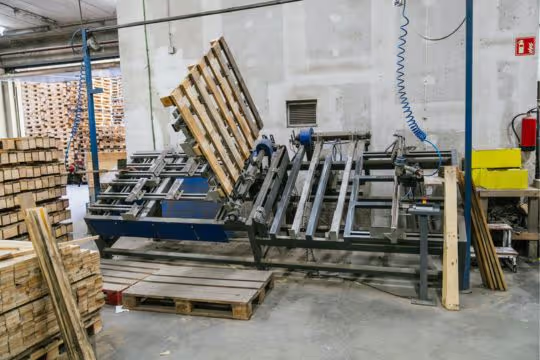
For a manufacturer considering shop retooling, it makes the most sense to invest in injection molds and press equipment. Switching from wood to metal requires complete retooling and retraining of employees. It would make sense if you are changing your targeted customer demographic. Otherwise, there is likely only a slight advantage to making the change. Some smaller manufacturers are not considering a complete retooling but will invest in plastic pallet fabrication equipment to operate alongside their wood pallet businesses. It is a viable option that allows even smaller pallet makers to remain competitive in the coming decade.
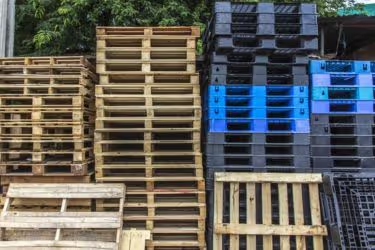
Your customers are considering their return on investment (ROI) when making purchasing decisions for pallets. The lifecycle ROI of pallets easily makes wood a favorite. With a lifespan of approximately three years and 15 reusable trips, the modest cost of around $20 per standard wood pallet is attractive. As a result, it is the type of ROI that appeals to customers in low-cost, short-term supply chains.
In contrast, plastic has an average lifespan of about ten years, can be made into about 75 reusable shipment trips, but costs approximately $80 per pallet. This product will appeal to companies with long production lines, automated processes, and rigorous hygiene regulations. It is a good idea to evaluate your customer demographic if you are considering making changes to your manufacturing processes. Customer behavior is a good indicator of the future of plastic and recycled pallets in the supply chains they will be used in.
Consider also the rapid growth of the recycled plastic pallet market for e-commerce fulfillment centers. Recycled polymer blends are lighter but stronger than traditional pallet designs. At the same time, certifications prove post-consumer recycled content levels, which can be a critical element of your customer's brand focus. Next, there is an accelerating trend toward automation that favors plastic pallets due to their consistent dimensional stability.
Changes in national guidelines and international corporate regulations also impact your customers and their purchasing decisions. Even customers who may have been perfectly happy with using wood pallets find that they must switch to plastic because their customers are demanding shipping using pallets of uniform sizes, weights, and perfect flatness on the deck.
Innovations in recycling pallets and the importance of reducing the carbon footprint of pallets are likely to lead to market changes. EU recycled content rules make rackable plastic pallets an attractive option. The same applies to customers who are transitioning their warehousing to require smart, GPS-enabled pallets. While plastic pallets are projected to grow over the next decade, manufacturers will need to advertise both locally and nationally to maintain their existing customer bases and attract new customers.
And, if you do decide to make changes to your products, raw material sourcing, and/or manufacturing methods, it is crucial to inform both current and prospective customers. In an increasingly global market, word-of-mouth advertising does not work in the same way as it does on a local level. Remember also that some international companies may be seeking partners for pallet makers to collaborate with on products entering the United States.
Pallet Company Marketing (PCM) is your pallet business marketing company that helps you grow, expand, and thrive within the industry. Our team handles everything from website design to search engine optimization (SEO) and social media. Whether you retool for plastic, stay with wood, or want to expand into metal pallet manufacturing, we support your advertising and brand-building. Let's talk about it. Schedule a call today!