

.png)

Discover how today's pallet buyers are finding suppliers, and what your company can do to become one of the businesses AI recommends.
What's Covered in This Series
Part 1: Why Buyers Choose Some Pallet Companies First
Part 2: Why AI Visibility Is the New Competitive Edge
Part 3: How AI Chooses Pallet Suppliers
Part 4: Preparing Your Website for AI Recommendations
Part 5: 5 Ways to Get More Customers with AI
-----------------------
Getting more leads does not always mean getting more business. If most of those leads are outside your service area, need products you do not offer, or simply are not a good fit for your operation, more inquiries can create extra work without bringing in the customers you want.
So, how do pallet companies generate more qualified leads? It starts with defining the commercial buyers you actually want, getting your company in front of them when they search, making it easy for the right prospects to request a quote, staying in touch with promising leads, and measuring which marketing channels generate worthwhile opportunities.
AI can assist at each stage. It can help organize customer data, develop content, manage follow-up, handle routine inquiries, and make lead information easier to analyze. But it works best as part of a larger lead-generation system guided by your knowledge of your market and operation.
While relationships, referrals, and direct sales are still important, AI-assisted marketing can help you reach more of the right commercial buyers and turn their interest into real sales opportunities.

Before using AI to find more prospects, decide first which prospects are worth finding.
A qualified lead is a potential buyer whose needs fit what your company can provide, not just someone who fills out a form or calls. That’s where target audience qualification comes in: deciding what makes a lead a good fit before spending time and money on attracting more of them.
What makes a buyer a good fit can depend on their industry, location, pallet needs, purchasing volume, delivery requirements, and long-term potential. You also need to consider whether you have the capacity to serve the account reliably.
AI can make some of this work easier. For example, you can use AI-assisted tools to organize CRM data or existing customer data, group accounts by common characteristics, summarize sales information, and help develop buyer profiles. If your best customers have similar industries, locations, buying habits, or product needs, you can use those patterns to guide your B2B lead generation for pallet suppliers.
The final criteria still need human judgment. AI can help spot patterns, but you still need to decide whether an account will be profitable and whether your operation can realistically handle the business. Before prioritizing a prospect, ask:
Defining these criteria gives the rest of your marketing a clearer target.
Visibility is useful when it puts your company in front of buyers you actually want to serve. For a regional pallet supplier, attracting thousands of visitors from areas it cannot realistically serve does little good.
This is where local landing page optimization can help. A local landing page is a page on your website that shows buyers what you offer in a specific area, including where you serve, what you can provide, the industries you work with, and how to get in touch. You do not need a separate page for every nearby city. Focus on pages that give buyers useful information and help them quickly see if your company is a good fit.
For instance, a pallet manufacturer looking to attract more customers in an area it already serves could create a page that shows where it delivers, what types of pallets it offers, who it serves, and how to request a quote. This gives prospects useful information instead of simply repeating a city name.
Your Google Business Profile can also help your company show up when buyers search locally. Google considers factors such as relevance, distance, and prominence, or how well-known a business is, when showing local results, so keeping your Business Profile complete and accurate can help buyers find you in relevant searches.
Location pages are only one way to bring potential buyers to your website. Inbound marketing for wooden pallet manufacturers also includes helpful content that answers questions buyers may have while comparing suppliers, from pallet specifications and custom requirements to recycling programs and supply needs.
Clear information can also improve your AI visibility by making it easier for AI search tools to find and understand your business. OpenAI says public websites can appear in ChatGPT's search results. Allowing OAI-SearchBot to access your site helps make your content eligible to appear in ChatGPT search, but placement is not guaranteed.
AI tools can also assist your team with researching topics, organizing content ideas, and identifying gaps across your website. Just make sure the information is accurate and matches the locations you cover and what you offer.
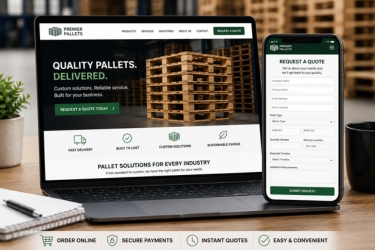
Getting the right buyer to your website only solves half the problem. Once there, that person should not have to search through multiple pages to figure out what you provide or how to contact your sales team.
This makes it easier to encourage a conversion, which is when a visitor takes the next step, such as calling your company or requesting a quote. Your website should make that next step easy to find and take.
Give buyers the information they need to see if your company is a good fit. Clearly explain the pallet products you offer, where you serve, the industries you work with, and anything else they need to evaluate your company. Then make the quote path easy to find.
A request for quote (RFQ) form should ask for enough information to understand what the buyer needs without making it too long or complicated. This could include the company name, location, pallet requirements, quantity, timeline, and contact information. Each form submission still needs to be reviewed to make sure it meets your criteria for a qualified RFQ.
AI chatbots or reception tools can provide another contact option. They can answer common questions, collect basic details, and handle after-hours inquiries so your team can follow up. The goal is to make it easier for buyers to get in touch, while leaving the actual sales process to your team.
Quote-Request Path Checklist
A prospective buyer should be able to determine:
If any of those answers are difficult to find, bringing in more quote requests may not help. Making the quote process clear and easy can be just as important as getting more people to your website.
Not every good prospect is ready for a new supplier right away. They may already have a supplier, be planning for a future need, or have a project that has been delayed. Those leads can still be worth keeping in your sales pipeline.
Lead nurturing means staying in touch with potential customers until they are ready to move forward. A customer relationship management (CRM) system can help your team keep track of contacts, past conversations, and follow-ups.
AI can help with admin tasks like summarizing past conversations, organizing prospects, drafting follow-up emails, and tracking what needs to happen next. For example, lead-nurturing email campaigns for logistics suppliers can focus on each prospect's interests rather than sending everyone the same promotional emails.
Once you understand a prospect's priorities, follow-up can focus on the business concerns that matter to that buyer. A value-based selling framework can help shape those conversations around areas such as supply reliability, responsiveness, operational fit, or other needs the buyer has identified.
AI can handle some routine tasks, such as organizing information, summarizing conversations, setting reminders, and drafting follow-up messages. Your sales team can then focus on deciding which opportunities are worth pursuing, what matters to each prospect, and when to have a direct conversation.

Do not evaluate lead generation only by website visits, calls, or form submissions. Those numbers show activity, but not whether it led to the commercial opportunities you want. Instead, look at what happens to those leads after they enter your sales process.
Useful metrics can include the number of qualified leads, RFQs, prospective buyer calls, lead sources, geographic fit, quote progression, and the quality of accounts generated. Where that data is reliably tracked, you can also compare your marketing costs with the opportunities or revenue associated with those leads.
Call tracking for industrial sales helps connect incoming phone calls with the marketing sources that generated them. Depending on the setup, a company can determine whether a caller reached the business after interacting with a particular campaign, webpage, or other marketing channel. Marketing attribution helps you see which marketing efforts brought in a lead or sales opportunity, though a buyer may come across your company several times before reaching out.
AI can help organize this data, spot common patterns, and show which marketing channels are bringing in better opportunities. Your sales and marketing teams still need to interpret what those patterns mean.
Suppose one campaign produces 50 inquiries while another produces 15. The first might look better based on volume alone. But if most of those 50 prospects are outside your service territory while the second campaign generates several well-matched RFQs, the smaller campaign may be more useful to the business. That feedback should influence future targeting and marketing decisions.
When evaluating a potential lead, ask:
Over time, these results can show which marketing channels are attracting the right buyers. If one source repeatedly brings in poor-fit inquiries while another produces buyers that match your territory and capabilities, you can use that information to decide where to adjust or invest more of your marketing budget.
This closes the loop between marketing and sales, giving your team better information to adjust targeting and decide where future marketing investment may be worthwhile.
Getting more customers with AI does not mean automating your whole sales process. AI is most useful when it strengthens specific parts of a larger system: defining the right buyers, attracting them, capturing useful inquiries, maintaining follow-up, and measuring what happens next.
The goal is to reach commercial buyers that fit your operation and that you can serve reliably. AI can make that process more efficient, but your market knowledge, operational realities, and sales judgment determine what constitutes a valuable opportunity. If you want help reaching more of the right commercial buyers, Pallet Company Marketing’s high-intent lead acquisition packages can help strengthen your lead-generation efforts.
-----------------------
Winning More Customers in the AI Era
A Five-Part Executive Series for Pallet Manufacturers
✅ Part 1: Why Buyers Choose Some Pallet Companies First
✅ Part 2: Why AI Visibility Is the New Competitive Edge
✅ Part 3: How AI Chooses Pallet Suppliers