

.png)

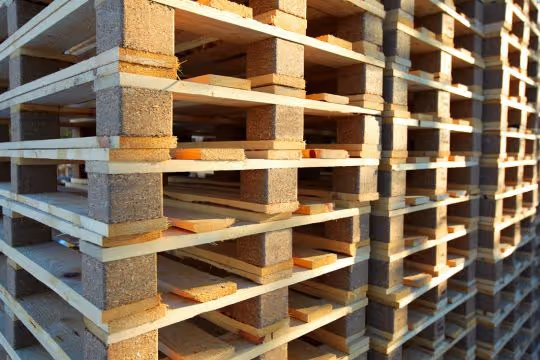
Wooden pallet prices rose sharply, driven in large part by materials costs that remain under upward pressure. Some factors affecting this include volatile pricing for low-grade lumber, rising freight rates, and supply uncertainties.
Rising costs hurt pallet manufacturing companies in at least two major ways. The first is more direct and affects output; the second is more indirect and affects input.
Firstly, the increased costs of materials for manufacturing pallets force either a reduction in output or a diminishment of profits and, therefore, cash flow. If a company takes a proactive approach and reduces the number of pallets they produce, it can serve fewer customers. It means a company may have to slash its customer base or, at the very least, put a damper on growth and expansion.
If, on the other hand, a pallet manufacturer chooses to continue producing as many pallets as needed to meet customer demand despite rising operating costs, it will have to find other ways to cut expenses, as it will be working with a smaller bottom line. This could lead to layoffs or a slip in working conditions, among other unwanted outcomes. It could also force pallet manufacturers to raise prices for customers to offset the costs.
Secondly, rising costs hamper other businesses’ ability to maintain their current operations, let alone grow. Of particular concern to pallet manufacturers are the current states and future fates of the food and beverage industry for wooden pallets and the transportation and logistics industry for plastic pallets; other industries to which the pallet market is tied include the pharmaceutical and chemical industries.
Companies in these industries are affected by rising operational costs, and their strategies for addressing them can easily translate into a lower need for pallets. This leads to invariable hits to pallet order size and frequency. It can also cause these companies, when they place orders for pallets, to order cheaper pallets made from lower-grade materials, which can result in lower revenue and profit per order.
Fewer orders, smaller order sizes, and orders for cheaper, lower-grade products with narrower profit margins from most or all of your pallet company’s customer base will obviously prompt a dramatic drop in revenue, which then trickles down to the bottom line. This then steers the conversation back to the same set of unwanted remedies as previously discussed, such as layoffs and holds on any growth and expansion.
To summarize, some of the main ways rising operational costs are hurting pallet manufacturing businesses include:
Ultimately, all of these factors combine to create a significant cash flow crunch. As a result, a company’s ability to pay bills and meet expenses becomes impaired, which in turn can damage its credit.
All of this leads to an urgent and widespread search for ways pallet manufacturers can reduce rising operating costs. Fortunately, there are many, and some of the most prominent are laid out below.

There are many tools at a pallet manufacturer’s disposal for cutting operational costs. Many companies are adopting an index-pricing structure, for instance, in which contract costs fluctuate automatically with regional shifts in material costs. Other pallet manufacturers are switching materials to cheaper options altogether. And still others are streamlining their product line to produce only standardized pallets.
Not only can strategies like these help pallet manufacturers to adapt to rising costs, but in better economic climates, they can contribute greatly to making a pallet business more profitable.
Here are some of the other powerful strategies pallet manufacturers can use to reduce rising operations costs.
Fuel and labor are two of the most significant regular expenses pallet manufacturers endure. Reducing fuel and labor costs in pallet manufacturing is therefore among the top ways pallet manufacturers can address rising operating costs.
There are two key areas in which pallet manufacturers can improve efficiency to reduce fuel costs: production and facility operations, and logistics and delivery operations.
To make production and facility operations more efficient, pallet manufacturers can:
To make logistics and delivery operations more efficient, you can:
You can also incorporate driver-management strategies, such as reducing idling time, purchasing fuel in bulk, and applying fuel surcharges to your invoices.
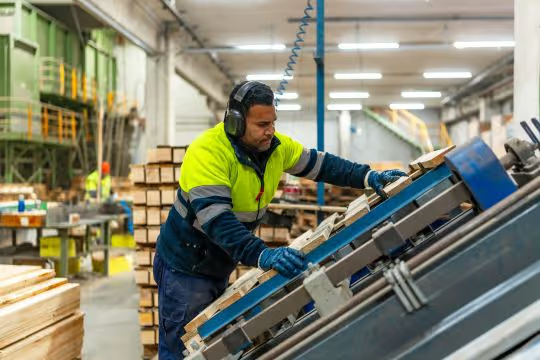
Many of the ways to reduce labor costs in pallet manufacturing are either the same as those for reducing fuel costs or align seamlessly with them. The primary methods of reducing labor costs are to streamline operations, transition to automation, and optimize plant layouts.
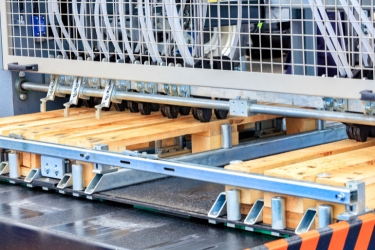
Why pay staff to do what machines can do far better for far cheaper? Processes that other pallet manufacturers have automated to reduce labor costs and improve operational efficiency include trimming and packaging.
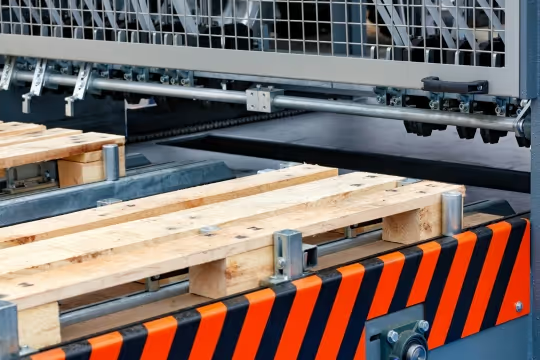
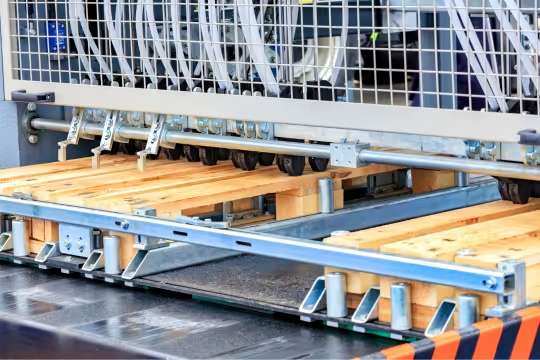
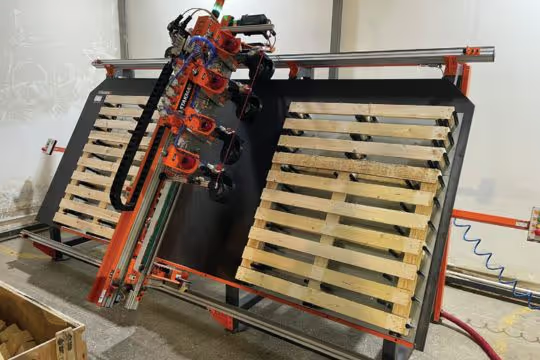
For wooden pallet manufacturers, an automated scanning and trimming line, for example, can reduce labor needs while improving lumber recovery and throughput. You can run three automated saw systems simultaneously to scan lumber, cut it to length, and send it to stackers, all without any human involvement.
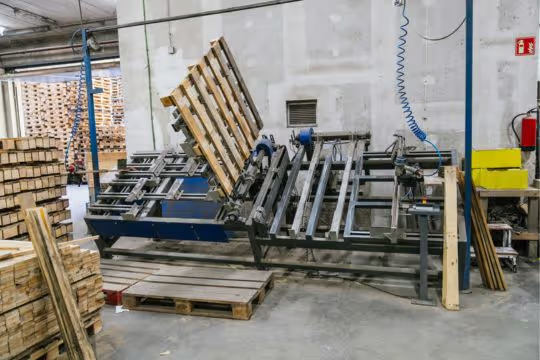
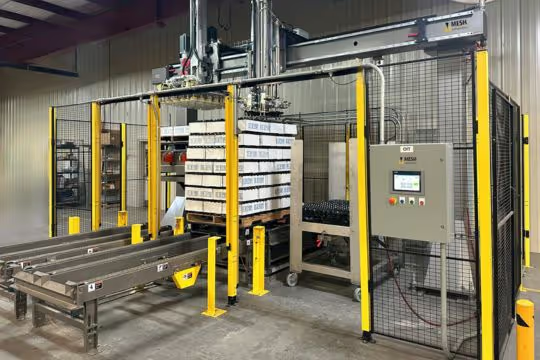
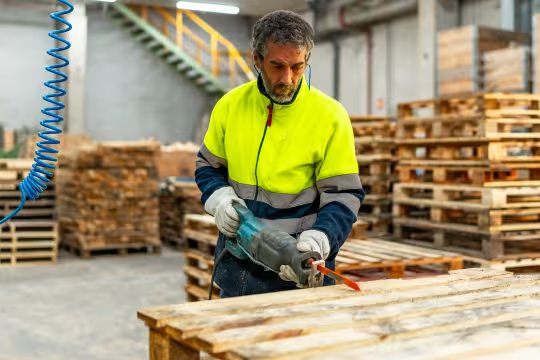
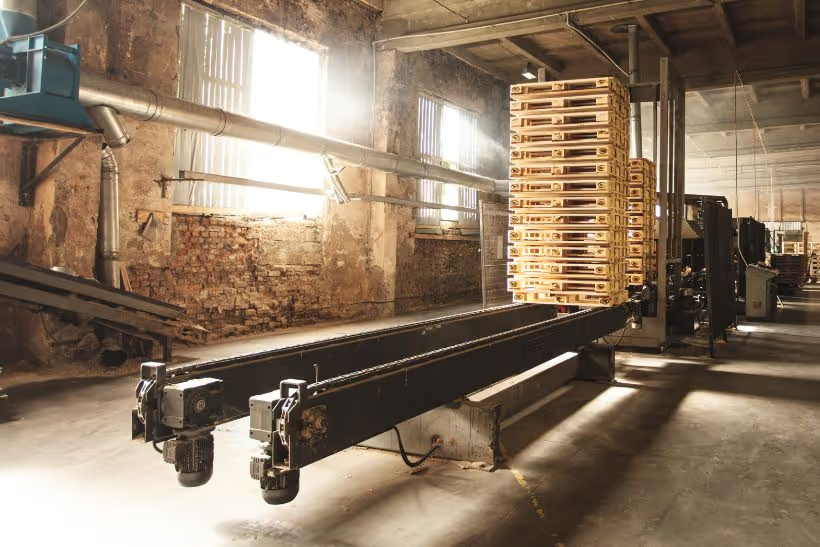
Automated dismantlers for recycling and repair can reduce the number of workers needed for the task while providing consistently clean, accurate cuts. Automated stackers, palletizers, and conveyors can also help you streamline your workforce.
Other useful automation equipment to streamline operations for pallet manufacturers includes layer pickers for fulfilling mixed loads and Autonomous Mobile Robots (AMRs) and Automated Guided Vehicles (AGVs) for moving pallets between zones.
In addition to these hardware adjustments, many software automation tools are available to enhance your workflow. For example, by implementing software for pallet tracking and inventory control, you can not only accelerate order fulfillment but also cut down on wasted workforce hours spent locating materials
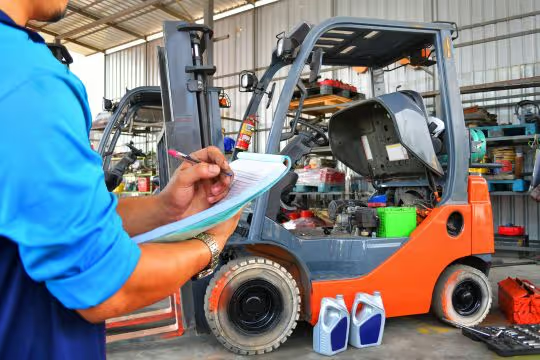
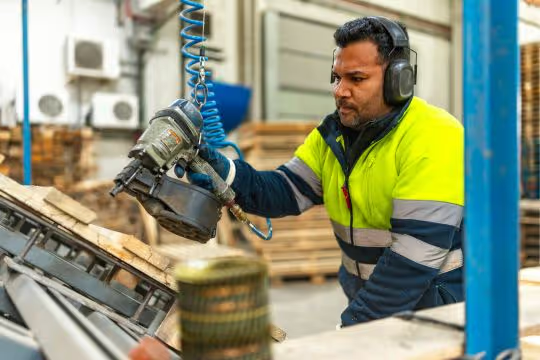
As for the machinery and processes you don’t automate, you can reduce the manual labor required to operate them by making the equipment as efficient as possible. By utilizing the most efficient pallet jacks, forklifts, or other manually-operated equipment, you can reduce how much time employees spend moving heavy items.
Implementing lean manufacturing principles can also help you to optimize your workforce. For example, you can use Value Stream Mapping (VSM) to improve materials placement, reduce needless movement and bring bottlenecks to an end. You can also use Setup Reduction (SMED) to minimize the time required to adjust machinery for different sizes and the downtime between runs.
In terms of HR, you can cross-train staff across various stations, so you can shift configurations to cover absenteeism or bottlenecks without the need to add on temporary labor. You can also transition payroll from an hourly system to a piece-rate system, where pay is based on how many pallets a worker produces. This alone can increase efficiency and throughput tremendously. And, if you don’t like the piece-rate model, there are many other ways you can implement incentive programs that align pay with output to improve workforce efficiency.
Scheduling is yet one more system you can optimize to reduce labor costs. By scheduling staff according to a careful analysis of production demands, you can prevent unnecessary overtime.
By minimizing the distance materials need to travel, you can reduce the time-intensive labor required of your workers. By making your processes leaner in this way, you achieve the same operational results each day with a smaller staff.
You can also help reduce unnecessary material handling and walking by eliminating movements that add no value to the time spent. For example, you can arrange areas for raw materials, cutting, assembly, and stacking in a more logical sequence.
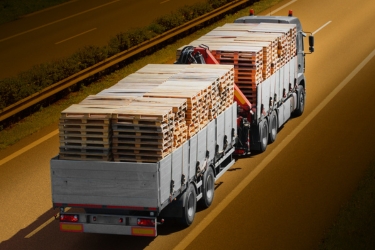
Stacking and packaging pallets properly is paramount to avoiding unnecessary expenses. So too is ensuring your compliance with shippers’ weight limits and carrier guidelines. One of the most potent ways to accomplish this is by optimizing packaging.
Much of a pallet manufacturing company’s operational costs involve packaging. To manufacture pallets, many materials must be integrated into palletized units, such as adhesives, fasteners, specialty coatings, and various supplementary materials. To ship pallets in a manner that keeps them secure, clean, and stable involves proper stacking and strapping, edge protectors, and corrugated tops. And for companies that do business internationally, fumigation or heat treatment for export compliance is also a likely factor. If a pallet manufacturer also makes reusable pallets or participates in a pooled pallets program, there is a whole other slew of packaging costs involved for tracking, sanitizing, and repairing those pallets.
To reduce packaging costs, pallet manufacturers can optimize their packaging systems in several ways.
You can redesign your packaging to be more efficient. For example, by simplifying packaging, you can reduce assembly time, thereby lowering labor costs. You can also use a lighter-weight and therefore less costly substrate without sacrificing its ability to keep pallets protected. Right-sizing packaging can reduce waste from unnecessarily large packages, reduce the need for and associated costs of filler, and increase stackability.
You can save on the costs for supplementary materials like adhesive, glue, and tape by reevaluating what closure materials you use. Whether you switch to automation or simply redesign manually-assembled boxes to fold closed, you can save small amounts on each box that add up to large savings over time. Likewise, you can reduce or eliminate the costs of protective packaging materials by designing more efficient packaging, using the right substrate for the right needs, and reducing the number of parts the packaging contains.
You’ve already seen how automation can reduce labor costs while increasing production capacity and efficiency. In packaging, it can also reduce packaging errors, pallet damage, and waste while providing more consistent packaging and improving quality controls.
Beyond these more common and obvious ways, pallet manufacturers can reduce rising operating costs through other, more creative options.
For example, you can offer on-site pallet services, such as sorting, repairing, and inventorying pallets at your customers’ locations. Either offer it as an additional 'à la carte' service at an extra cost, or fold it into your existing pricing structure to increase your competitiveness in a tightening marketplace. This could help you avoid having to increase your pallet prices considerably, or even at all.
By the year 2030, the global pallets market is predicted to grow to $17.8 billion for wooden pallets and $11.2 billion for plastic pallets a compound annual growth rate of 4.5 percent and 5.6 percent respectively. To be part of this surge requires weathering periods of rising operational costs, like the one we're in now. To avail yourself of tailored pallet industry solutions to help reduce your operating costs, whether pricing pressure is present or not, contact us right away.