

.png)
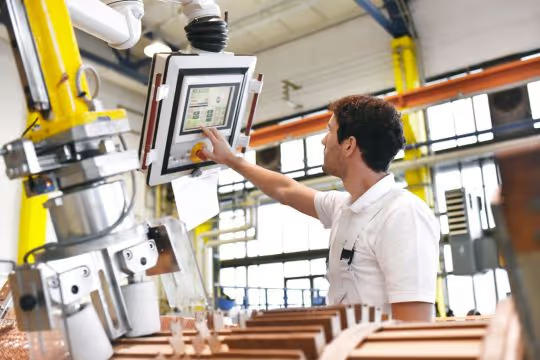
Artificial intelligence (AI) in manufacturing, branding, and marketing is here to stay. For pallet manufacturers still on the fence about adopting it, it is high time to make a decision. And, if you are looking to grow your business, smart factory solutions might be the way to go. Let's look at how AI can help pallet manufacturing businesses save money, cut waste, and boost customer satisfaction. (You might even be able to add a new revenue stream to your business model!)
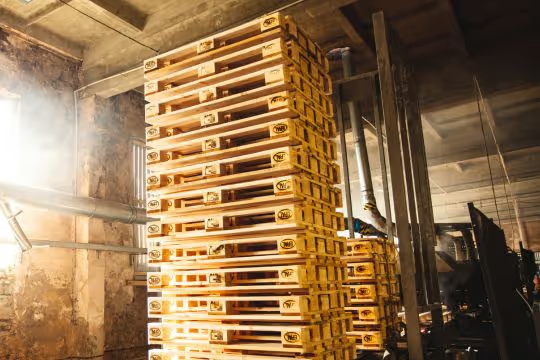
There is increased demand for automation in the pallet manufacturing industry. In particular, smaller and mid-sized companies have to adapt quickly to keep pace with larger manufacturers. That said, you do not have to change the way you do business completely overnight. There are some core production automation tools that you might consider adding one at a time.
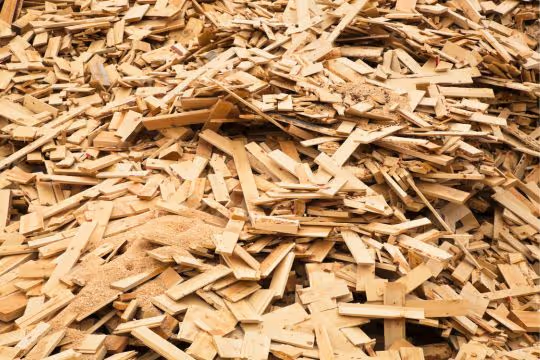
Cutting lumber is one of the most wasteful elements of pallet manufacturing. However, it is impossible to make pallets without it. Here, AI can make a significant difference and save you money in the process. Examples of available technologies include programmable saws and defect-scanning software. By switching from standard cutting processes to AI-assisted ones, you maximize lumber use and significantly reduce waste.
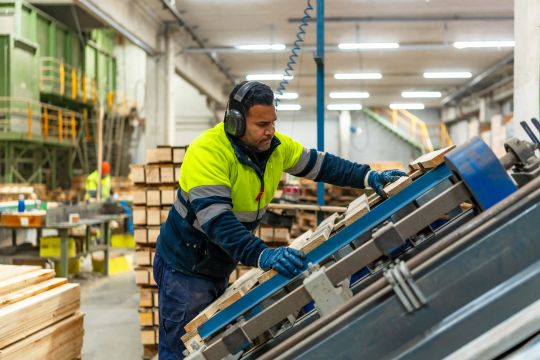
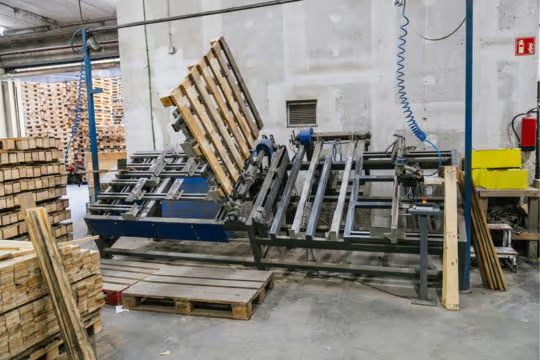
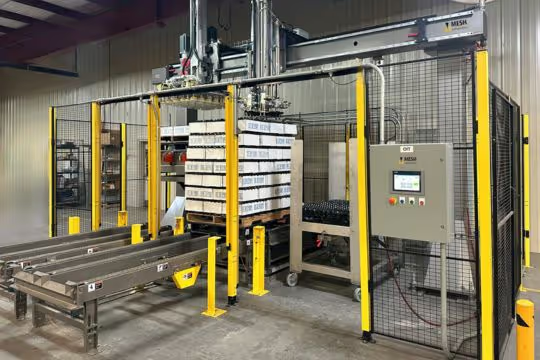
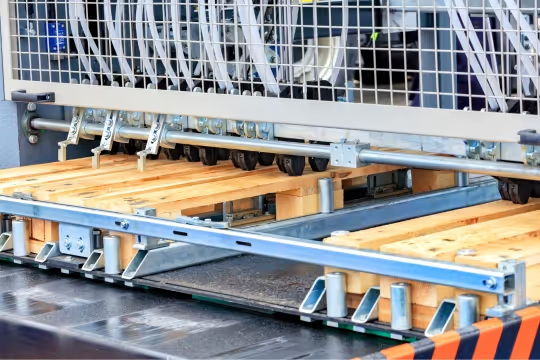
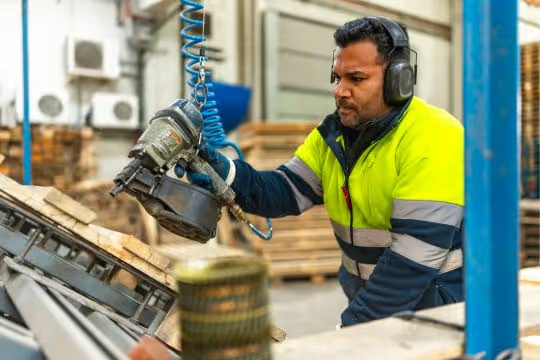
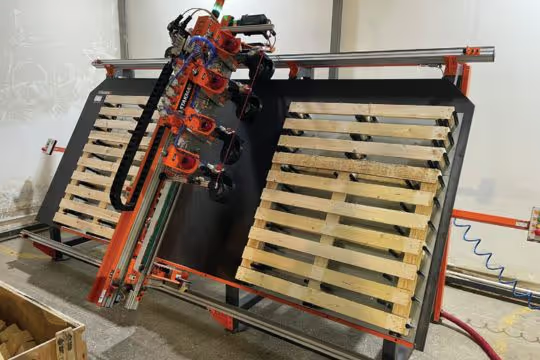
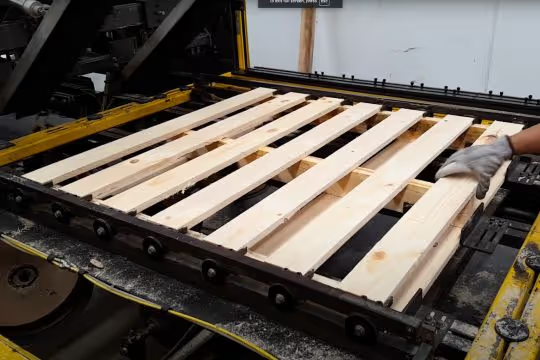
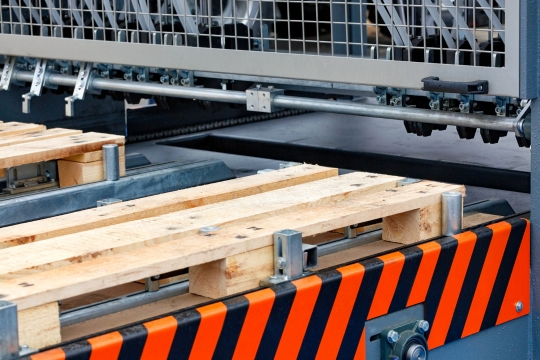
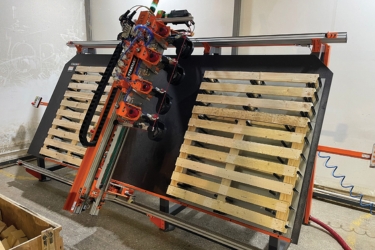
Next to initial wood processing, assembly is another area where it is clear how AI can help pallet manufacturing businesses save money and increase production. High-speed nailing machines with robotic nail placement produce consistent, high-quality pallets that are assembled much faster than by hand. You no longer have to redo pallets that are not nailed in accordance with the specifications. Moreover, if you find that orders have increased, nail machines help you keep up with demand without adding employees or incurring expensive overtime.
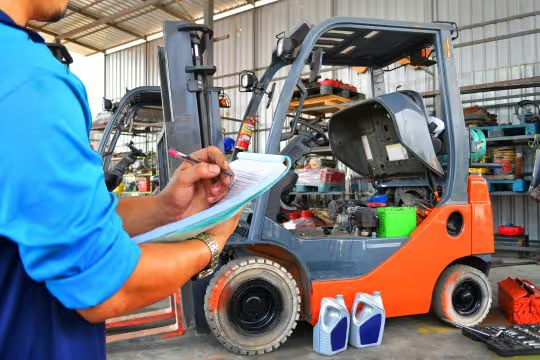
Mid-sized companies, in particular, benefit greatly from integrating AI into quality control operations. Reduce defects and minimize returns by installing and programming sensors to verify board and nail placement. Some businesses have combined quality control sensors with various elements of the manufacturing process, such as lumber handling, feeding, and strength verification. The more intricate your operation is, the more extensive is your need for quality control in specific areas of production.
Small- and mid-sized business owners who initially approach AI find themselves in a quandary. Where should they start with the automation? Which area of manufacturing could AI significantly improve? When you're looking for a quick, measurable ROI, wood waste is a good option. Every pallet manufacturing business grapples with it. Many have already been looking for ways to reduce waste on the production floor.
Consider that next to labor costs, the expense of raw materials is at the top of the balance sheet. Even a modest 5% reduction in waste makes a big difference. (Some optimization software companies suggest that material waste can be reduced by up to 25%.) This technology approaches cutting logs, boards, and lumber with sensors that affect:
If you want to take waste optimization to the next level, invest in end-to-end waste control. The software will track a variety of waste streams, including scrap and sawdust, integrate with any inventory control and purchasing platform you are already using, and help you adjust production with an eye on demand.
When you introduce waste reduction at the cutting machine, static reordering may no longer be effective. Here, AI can assist with inventory management by automating purchasing decisions while factoring in waste reduction. If you stock supplies at multiple locations, the software will automatically maintain inventory levels you feel comfortable with while reducing orders based (again) on waste reduction.
And if your latest digital marketing efforts for pallet companies are as successful as you hoped, AI-driven inventory management will factor in customer behavior, so you can replenish stock without overbuying. It is noteworthy that the software can incorporate this change even when adjusting the ordering to account for seasonality and historical sales data.
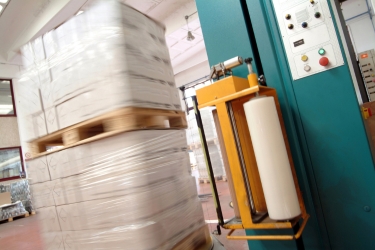
IIoT is the point at which software connects the machines you use with the existing materials inventory and available labor. As the endgame, it is an interconnected system of devices, applications, sensors, and analytics. Let's break down the steps.
One of the most critical aspects of IIoT is quality control. The system uses barcodes and similar tracking devices to help you understand where the lumber you used in each product came from. It not only promotes inventory accuracy but, most importantly, alerts you to quality control issues. If one supplier has been sending you a bad batch of raw materials, you can now easily identify them and correct the problem at the source.
Few small- to mid-sized pallet manufacturers have the funds to completely overhaul production and back-office functions with state-of-the-art AI. Therefore, it makes sense to incorporate one system at a time and scale as needed. Which expense do you want to focus on first?
Raw material optimization reduces wood waste and increases the number of sellable products from the same lumber load. Some software solutions to consider include CutLog and SawmillSmart. For proactive maintenance, Rockwell Automation is one of the available platforms.
Machine vision removes the human element from visual inspections, inventory tracking, and raw material sorting. It allows you to focus your labor investment across different roles while reducing the labor required for pallet making. Besides that, you also reduce your training costs. One popular platform is Cognex, which offers machine vision solutions.
To make this investment work for your budget, identify one problem, solve it with AI, and reinvest the savings into another upgrade. Then, keep on going.
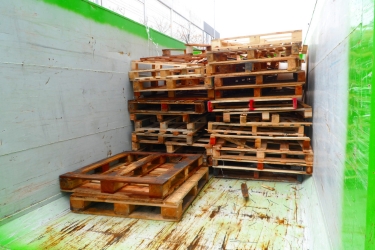
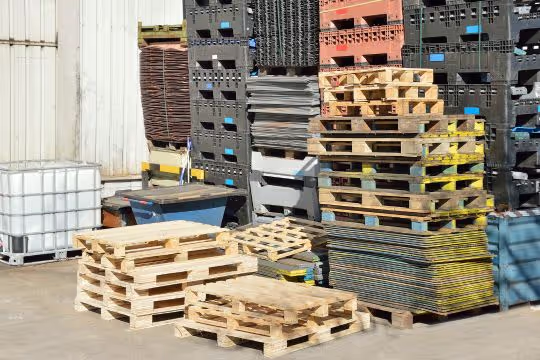
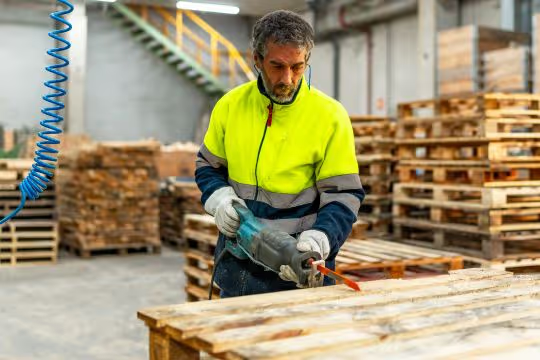
Another way AI can help pallet manufacturing businesses is by freeing you up to explore other revenue streams. A popular one is to make money from what you would have previously tossed as waste. Examples include reusable pallet boards and repurposed scraps. Some companies have begun reselling boards and also offering mulch for sale. When you find uses for what previously was a waste product, you also reduce disposal costs.
You are benefiting from predictive analytics, automated pallet quality inspections, and machine learning incorporated into pallet design. Don't keep it to yourself! Any AI investment you make increases your productivity potential. It also allows you to keep prices stable for customers and, in some cases, even reduce them.
It is now time to leverage the technology by showcasing it through dedicated marketing services for pallet manufacturers. Integrate information from your website, social media, and local listings into your search engine optimization (SEO). Position yourself as the small or mid-sized business that can meet pallet needs without customers having to rely on large companies that lack the personal touch.
Let's talk about it. Schedule a call today!